

(And How to Calm the False Alarm Without Falling Behind)
There’s a specific kind of stress that doesn’t come from doing too much — it comes from feeling like everything needs to be handled right now, even when nothing is truly on fire.
Your inbox feels loud.
Your finances feel fragile.
Your to-do list feels like a countdown clock.
And yet, if you stop and look closely, there isn’t a real emergency happening.
No deadline exploding.
No crisis unfolding.
No actual consequence if you slow down for an hour.
So why does your body still feel like it’s bracing for impact?
This isn’t laziness.
It isn’t poor time management.
And it isn’t a motivation problem.
It’s false urgency — and once you see it, you can’t unsee it.
What “False Urgency” Actually Is
False urgency is the sensation that everything is critical, even when nothing truly is.
It’s the feeling that:
- resting means falling behind
- pausing means missing something important
- slowing down is irresponsible
- choosing one task automatically means failing another
Your nervous system treats normal life maintenance as if it’s an emergency situation.
Not because you’re dramatic — but because your body has learned that urgency equals safety.
At some point (often years ago), moving fast became how you stayed afloat.
Why So Many Capable People Live in a Constant Alarm State
False urgency doesn’t show up randomly. It’s often shaped by:
1. Long-Term Financial Pressure
When money has ever felt uncertain, your brain learns that delay equals danger.
Bills, purchases, emails about money — they all get flagged as urgent, even when they aren’t.
2. Emotional Responsibility for Others
If you’ve spent years being the reliable one, the fixer, the planner — urgency becomes your default posture.
Slowing down feels like letting people down.
3. Productivity Culture Conditioning
We’ve been trained to believe:
- faster = better
- busy = valuable
- calm = lazy
So when you’re not rushing, your body assumes something is wrong.
How False Urgency Hijacks Productivity
Ironically, false urgency doesn’t make you more productive — it makes you reactive.
You jump between tasks.
You answer emails immediately but avoid deeper work.
You stay busy but feel unfinished.
Because urgency prioritizes speed, not importance.
This is why traditional productivity advice often fails people stuck in this loop — it adds more systems to an already overloaded nervous system.
If productivity tools have ever made you feel worse instead of better, this explains why.
If your nervous system feels fried before you even open your planner, this guide explains why traditional systems backfire →
The Witch’s Guide to Nervous-System-Friendly Productivity
Urgency vs. Importance (They Are Not the Same Thing)
One of the most helpful distinctions you can make is this:
Urgent things feel loud.
Important things feel quiet.
Urgent tasks demand immediate attention.
Important tasks create long-term stability.
False urgency trains you to chase the loudest thing — not the most meaningful one.
That’s why you might:
- answer emails but avoid planning
- scroll while panicking instead of resting
- reorganize instead of deciding
Your system isn’t broken — it’s overwhelmed.
The Body Always Believes the Alarm
Here’s the part most advice skips:
False urgency is not a mindset problem.
It’s a body response.
Your nervous system doesn’t care if a threat is logical — it cares if it feels familiar.
If you’ve lived through long periods where:
- rest wasn’t safe
- money stress was constant
- stability felt temporary
Your body learned to stay alert all the time.
You can’t out-think that with willpower.
You calm it by creating containment.

Containment: The Antidote to False Urgency
Containment means giving your nervous system edges.
Instead of:
- endless to-do lists
- open-ended goals
- constant decision-making
You create:
- clear limits
- gentle defaults
- predictable rhythms
This is where structure becomes soothing instead of controlling.
Why Routines Calm the Alarm (Not Control You)
People often resist routines because they associate them with restriction.
But for someone living in false urgency, routines do the opposite — they remove constant decision-making.
When your brain doesn’t have to ask:
- “What should I do now?”
- “What am I forgetting?”
- “What deserves attention?”
It relaxes.
This is why ritual-based planning works so well for anxious systems.
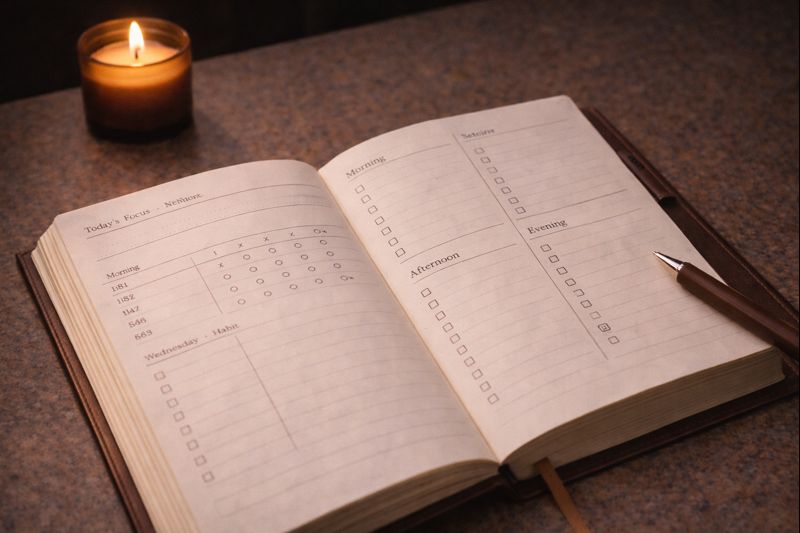
A simple, repeated layout becomes an anchor — not a cage.
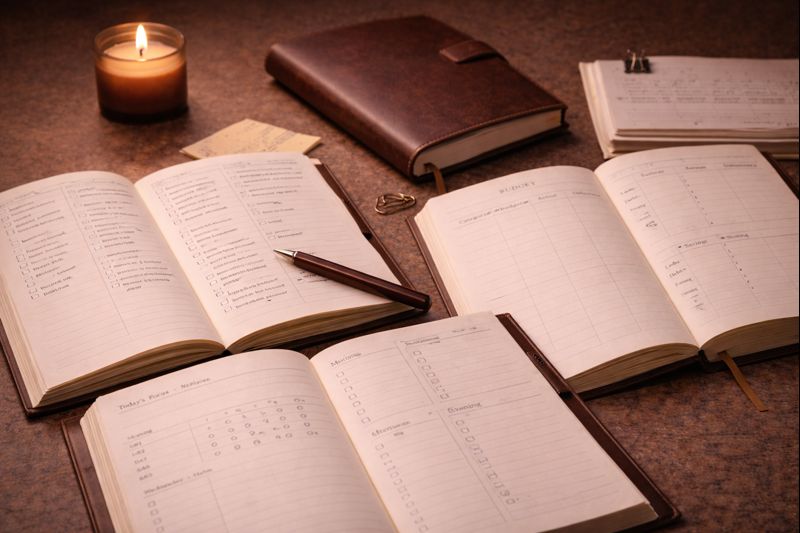
This is where a Witchy Routine Planner or Daily Ritual Habit Tracker can help — not because it forces productivity, but because it creates predictability.
Not “do more.”
Just: you already know what comes next.
False Urgency and Money Anxiety
False urgency shows up loudly around money.
Not always as overspending — often as:
- compulsive checking
- constant budgeting “tweaks”
- feeling behind even when bills are paid
Money becomes a constant background alarm instead of a tool.
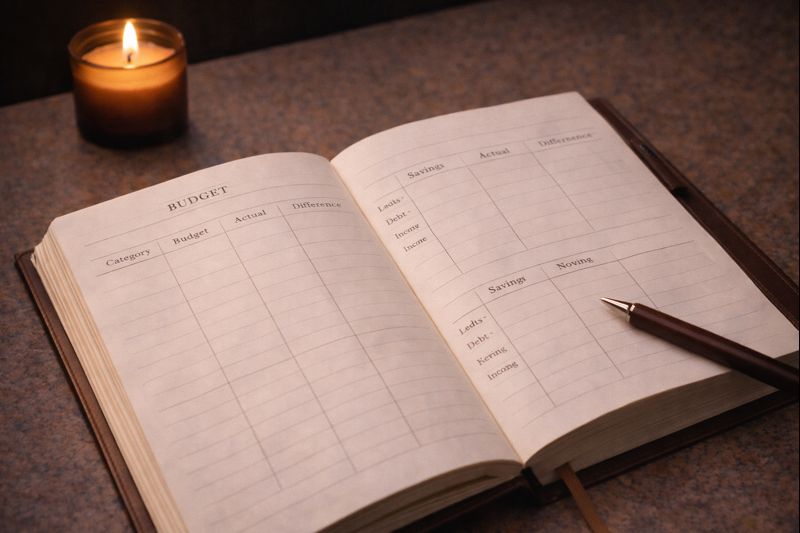
When this happens, the goal isn’t tighter control — it’s emotional containment.
Money planning that works in this state:
- has fewer categories
- uses shorter time horizons
- focuses on maintenance, not optimization
You don’t need a perfect plan.
You need one that doesn’t trigger panic.
Emotional Clutter Feeds Urgency
Here’s something subtle but powerful:
False urgency is often fueled by unprocessed emotional clutter, not actual workload.
Unspoken expectations.
Old guilt.
Lingering fear.
Unresolved pressure.
Your system keeps pushing forward because stopping would mean feeling.
That’s why slowing down can feel unsafe.
This urgency loop is often tied to emotional clutter, not task volume — I unpack that here →
The Emotional Decluttering Ritual: How to Clean Your Life Without Cleaning Your House
Clearing urgency sometimes means clearing emotion — gently, at your pace.

When Shadow Work Helps (Without Getting Heavy)
False urgency is often inherited.
From:
- childhood responsibility
- unstable environments
- long-term stress cycles
This is where reflective tools — like a Shadow Work Journal Printable — can be grounding.
Not to “fix” yourself.
Not to relive trauma.
But to gently ask:
- When did slowing down stop feeling safe?
- Who taught me that rest equals risk?
- What would happen if I didn’t rush today?
Awareness loosens the grip.
What a Calm Day Actually Looks Like
A calm day is not empty.
It’s contained.
It might include:
- 1–3 clear priorities
- a predictable rhythm
- intentional pauses
- unfinished things that don’t feel threatening
You still move forward — just without the siren blaring.
Progress doesn’t require panic.
You Are Not Behind — You’re Overstimulated
If everything feels urgent, it doesn’t mean you’re failing.
It means your system has been asked to carry too much alertness for too long.
Calm is not quitting.
Slowness is not falling behind.
Gentleness is not weakness.
False urgency fades when your body learns it doesn’t have to run anymore.
And that’s not something you force.
It’s something you build — one contained, quiet choice at a time.
A Gentle Closing Ritual
Before you leave this page, try this:
Ask yourself:
If nothing was an emergency today… what would I do differently?
You don’t have to act on the answer.
Just notice it.
That noticing is how the alarm begins to soften.
If you want tools that support this kind of calm — not hustle — explore the ritual-based planners and reflection journals in my shop, designed for nervous systems that need safety first, productivity second.
You don’t need to run faster.
You just need fewer false alarms. 🕯️


