
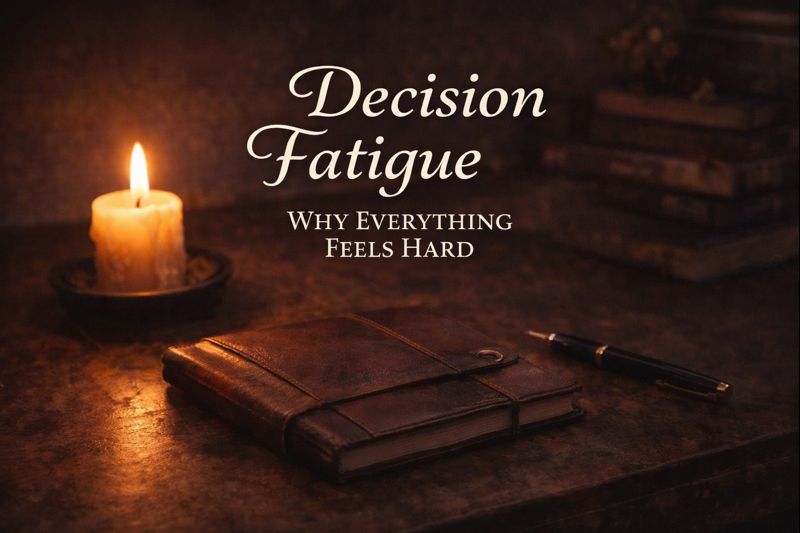
Some days, it’s not that you’re tired.
You’re not sad.
You’re not unmotivated.
You’re not even burned out — at least not in the dramatic way people talk about burnout.
You’re just… done choosing.
What to work on first.
What to eat.
What to ignore.
What actually matters today.
Even small decisions feel heavy.
Everything feels like too much effort.
And the idea of “optimizing” anything makes you want to shut down completely.
This is decision fatigue — and witches have always known how to work with it.
Not by giving up control.
Not by simplifying your life into nothingness.
But by removing unnecessary decisions so your energy can return to what matters.
What Decision Fatigue Actually Is (And Why It Feels So Draining)
Decision fatigue happens when your brain has made too many choices without recovery.
Every decision — even tiny ones — costs mental energy.
Modern life demands constant choosing:
- What emails to answer
- What task to start
- What system to use
- What advice to follow
- What version of yourself to show up as
Eventually, your brain protects itself by slowing down.
Not because you’re weak —
but because it’s overloaded.
Decision fatigue often shows up as:
- Indecision
- Procrastination
- Avoidance
- Irritability
- Wanting someone else to decide anything for you
This is not a motivation problem.
It’s a cognitive load problem.
Why Productivity Advice Makes Decision Fatigue Worse
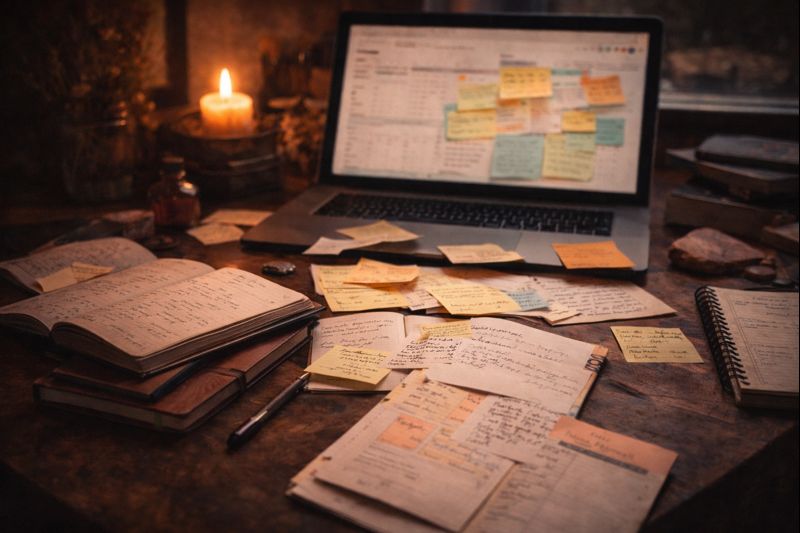
Most productivity advice adds decisions instead of removing them.
Choose the right system.
Pick the best method.
Customize your routine.
Optimize your workflow.
Each “solution” becomes another choice.
This is why people who know how to be productive still feel stuck.
You already explored a similar tension in “The Witch’s System for Getting Everything Done (Without Burning Out)” — structure works best when it reduces thinking, not increases it.
Decision fatigue happens when life demands too much agency for too long.
The Witch’s Perspective: Power Is Conserved, Not Constant
In witchcraft, power isn’t about doing everything.
It’s about knowing where not to spend energy.
Witches rely on:
- Ritual repetition
- Predictable tools
- Fixed containers
- Symbolic defaults
They don’t decide from scratch every day.
They create systems that decide for them.
That’s the cure for decision fatigue.
The First Rule of Decision Fatigue Recovery: Fewer Choices, Not Better Ones
When you’re decision-fatigued, the goal is not to make better decisions.
It’s to make fewer of them.
This is where modern self-help often goes wrong — it pushes clarity when what you need is containment.
Containment means:
- Fixed formats
- Reusable templates
- Pre-decided rituals
- Gentle defaults
This is why ritual-based planning works so well for decision fatigue.
Step One: Identify Your Daily Decision Drains
Most people assume decision fatigue comes from “big life choices.”
It usually doesn’t.
It comes from tiny, constant decisions, like:
- What to work on first
- How much is “enough”
- When to stop
- Whether something counts as productive
These micro-decisions drain you faster than major ones.
Once you see them, you can remove them.
Step Two: Replace Choice With Ritual
A ritual removes the question:
“What should I do?”
And replaces it with:
“What do I always do here?”
For example:
- Always planning at the same time
- Always using the same page format
- Always starting with the same question
- Always ending work the same way
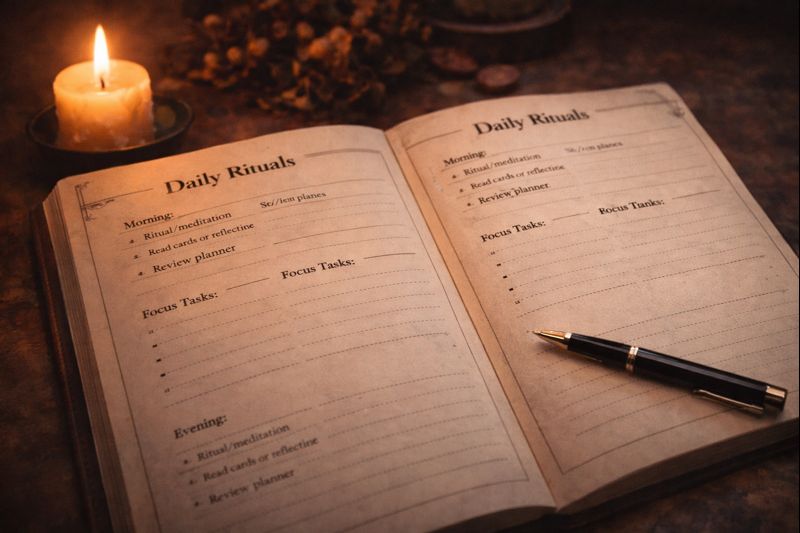
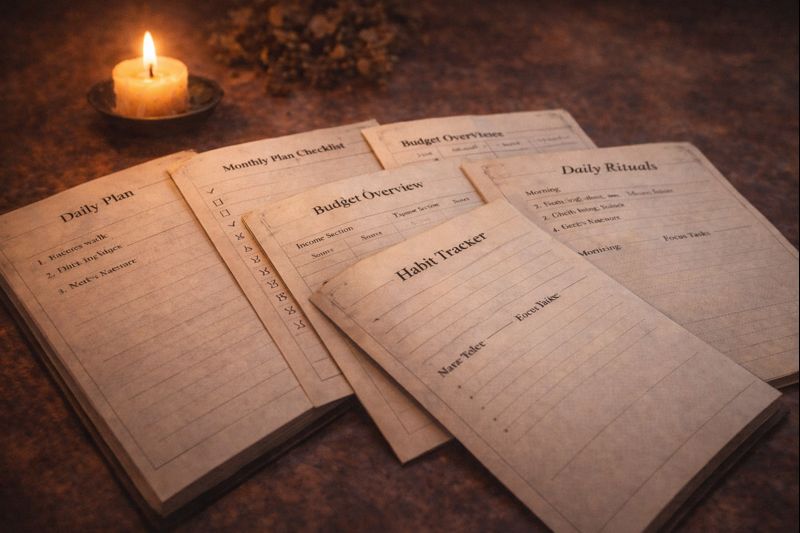
This is why undated, ritual-based planners are especially effective for decision fatigue — they don’t ask you to reinvent the process every day.
A tool like a Witchy Routine Planner quietly reduces decision load by offering a consistent structure you can return to without thinking.
Step Three: Shrink the Scope of “Today”
Decision fatigue makes everything feel equally urgent.
The cure is scope reduction.
Instead of asking:
“What all needs to happen today?”
Ask:
- What would make today easier?
- What actually needs attention right now?
- What can safely wait?
This echoes a principle you touched on in “The Emotional Decluttering Ritual: How to Clean Your Life Without Overwhelm” — not everything deserves equal mental space.
Productivity improves when mental clutter decreases.
Decision Fatigue & Money: Why Finances Feel Especially Heavy
Money is one of the biggest decision-fatigue triggers.
Not because of numbers —
but because of emotional weight.
Every financial choice feels like:
- A moral decision
- A future-impact decision
- A survival decision
So the brain avoids it.
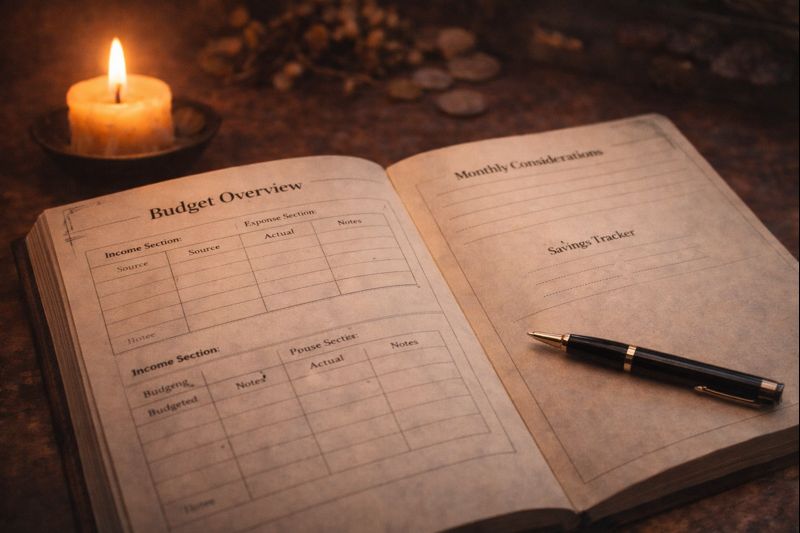
Gentle financial tools work best here — not because they’re “better budgets,” but because they remove daily money decisions.
A ritual-based tool like a Witchy Budget Planner allows you to:
- Visit money intentionally
- Contain decisions to one moment
- Stop thinking about it the rest of the time
That’s relief, not restriction.
Step Four: Create Default Decisions (This Changes Everything)
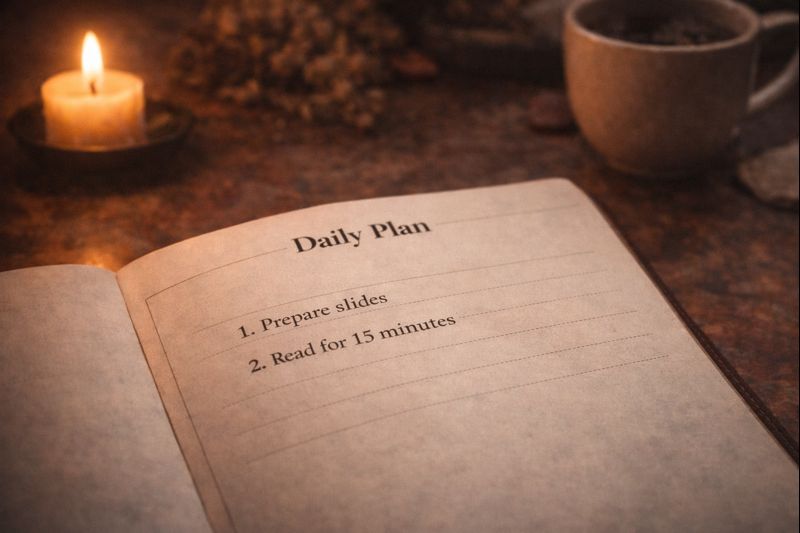
A default decision is one you make once so you don’t have to keep making it.
Examples:
- “This is how I plan.”
- “This is how I track habits.”
- “This is how I check money.”
- “This is how I close my day.”
Defaults are not rigid.
They’re merciful.
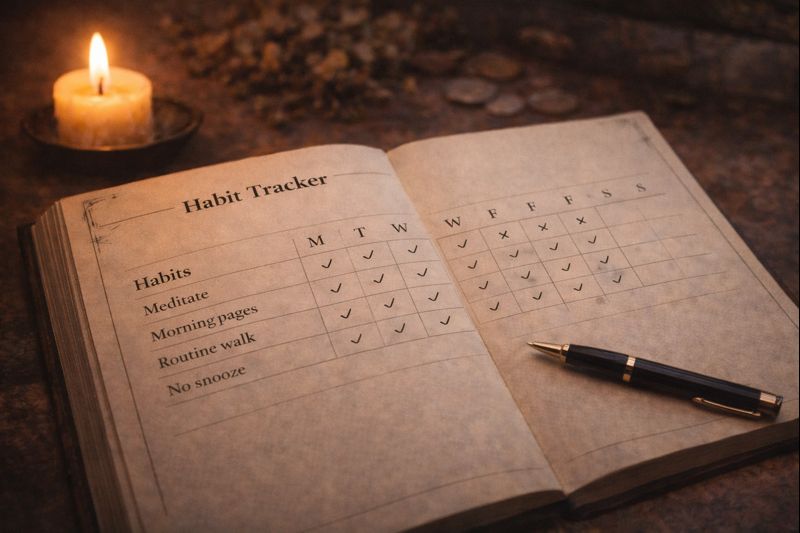
This is where simple tools like a Witchy Habit Tracker shine — they eliminate the need to decide how to track progress every time you return to it.
Progress becomes automatic instead of effortful.
Why Decision Fatigue Is Mistaken for Laziness
When people are decision-fatigued, they often hear:
- “You’re overthinking.”
- “Just do something.”
- “Stop being indecisive.”
But indecision is not a character flaw.
It’s a capacity signal.
Your brain is saying:
“I’ve chosen enough for now.”
The answer is not pressure.
It’s permission to reduce load.
Seasonal Decision Fatigue (Why Winter Makes It Worse)
Decision fatigue intensifies in winter for many people:
- Less light
- Lower energy
- More emotional processing
- Fewer external rewards
This doesn’t mean you’re failing.
It means your system wants:
- Fewer priorities
- More repetition
- Less novelty
- Shorter planning horizons
You already explored seasonal alignment in “The Winter Witch Productivity Method”, but decision fatigue reframes winter as a decision-light season, not a productivity drop.

How You Know Decision Fatigue Is Lifting
Decision fatigue fades quietly.
You’ll notice:
- Tasks feel simpler
- Choices feel less loaded
- You start things without debating
- You trust your defaults again
This isn’t motivation returning.
It’s mental space reopening.
Why This Topic Has Viral Potential
Decision fatigue is everywhere — but rarely named.
This post works because it:
- Names a common but invisible struggle
- Removes shame
- Offers immediate relief
- Doesn’t demand transformation
- Validates slow, ritual-based systems
People don’t want more advice.
They want fewer decisions.
Final Ritual: You Don’t Need to Decide Everything Today
If everything feels hard right now, ask yourself this:
“What can I stop deciding?”
Then build a ritual around that answer.
Power doesn’t come from choosing constantly.
It comes from choosing once — and resting inside it.
That’s witchcraft.
That’s wisdom.
That’s sustainable productivity.


